
TAKEAWAYS: Shaping the Future of the Global Supply Chain

The Math Behind Holiday Inventory
 By Shana Wray
Principal Solutions Architect & Supply Chain Analyst, FourKites
Consumers won’t think about the holidays for months, but by July, retailers had already made the decisions that determine what’s on shelves this winter, and what it costs to get there. Shipping costs from China climbed 61% year-over-year this summer, driven by continued Red Sea and Strait of Hormuz disruption, giving many shippers reason to pull holiday inventory forward.
Earlier isn’t automatically safer. Every extra week in a distribution center adds to carrying costs that commonly run 15% to 25% of inventory value annually once capital, insurance, labor, and space are factored in. For seasonal goods with a hard sell-by window, a few additional weeks of dwell time can erase the savings an early booking was meant to protect.
That’s why freight rate alone is the wrong lens for this decision. Paying a premium to move a shipment now can be justified if a delay threatens a product’s entire selling season. Pulling every SKU forward regardless of risk just trades one cost for another, tying up working capital and warehouse space months before that inventory generates a dollar of revenue.
What matters is whether the team can tell, shipment by shipment, which shipments warrant the early move and which can safely wait. That requires visibility into where inventory sits today, how much buffer remains before it’s needed, and which exceptions actually justify intervention.
By the end of summer, most holiday inventory is already in motion. Retailers now have to make sure they aren’t paying to avoid one risk only to create a costlier one elsewhere in the network.
How Manufacturers Can Close the AI Readiness Gap
By Michael Hart
Head of Product, Industry Strategy & Growth
Rockwell Automation
For years, manufacturing investments focused on isolated automation and task-level execution. Now, as factory floors become more intelligent, digital maturity—the ability to seamlessly connect systems, contextualize data, and act in real time—has emerged as the single biggest differentiator for manufacturers.
According to Rockwell Automation’s latest report*, nearly half of manufacturers rank AI and machine learning as their top outcome drivers over the next five years. Yet, only 43% of collected data is used effectively. Many manufacturers remain trapped in the “connected plant” stage. They have digitized workflows and moved off paper, but decision-making remains reactive and data remains siloed.
While 93% of manufacturers have a manufacturing execution system (MES) in place, only 28% have deployed it enterprise-wide, with just 23% reporting full integration. This suggests that there’s still heavy reliance on manual decision-making, disconnected data, and reactive processes. These organizations typically see little operational improvements as any new AI initiative will face resistance and be difficult to scale.
The difference between the “connected plant” stage and the next stage of digital maturity that enables predictive analytics is huge—systems can proactively guide decisions, enable supply chain visibility in real-time, and model outcomes before they happen. Manufacturers become closer to enabling true autonomous operations, where systems are modular, closed-loop, and capable of self-optimizing with minimal intervention.
Intelligent industrial environments require contextualized data from connected shop floors to learn, adapt, self-optimize, and have visibility of operations anywhere and anytime as well as a high degree of predictability. Digital maturity enables faster response times, resilience, better quality, and less downtime.
*This report gathered input from 1,560 hardware, software, and services decision-makers across manufacturing and industrial operations globally. Respondents represent 17 leading manufacturing countries, spanning discrete, process, and hybrid industries; 54% are primary decision-makers.
Diversification Tops Domestication

Despite years of pressure to bring production closer to home, reshoring remains near the bottom of the priority list for supply chain leaders, according to Accenture’s latest Pulse of Change survey.
Surveying 3,000 C-suite leaders across 20 countries and 19 industries, including 322 supply chain and operations executives, the report finds that fewer than one in three leaders plan to reshore or nearshore operations. Investing in domestic production ranks last among strategic priorities, even as 78% of supply chain leaders say operations have become materially harder over the past six months.
Instead, leaders are building resilience within the networks they already have. Two-thirds have already renegotiated or restructured partnerships based on a supplier’s country of origin, and nearly half are diversifying their supplier networks. Forecasting, scenario planning, and risk management are top priorities for the majority of supply chain executives.
There is a notable split between supply chain leaders and the broader C-suite. Operations executives are most focused on supply chain continuity and rising costs, while the broader C-suite is prioritizing AI and digital tech investments. While both groups are increasing AI spending, supply chain leaders are approaching it through a more workforce-focused lens.
Regional pressures differ, too. In the Americas, 56% of supply chain executives name labor and talent shortages as the disruption most likely to force a strategy change in 2026. This number is well above what is reported in Asia-Pacific (45%) and Europe, the Middle East, and Africa (32%).
Reshoring makes for good headlines, but it isn’t a practical solution for the majority of companies, the report stresses. Instead, leaders are leaning into stronger forecasting, diversified suppliers, and resilient partnerships.
Robots Are Coming for Warehousing’s Hardest Jobs
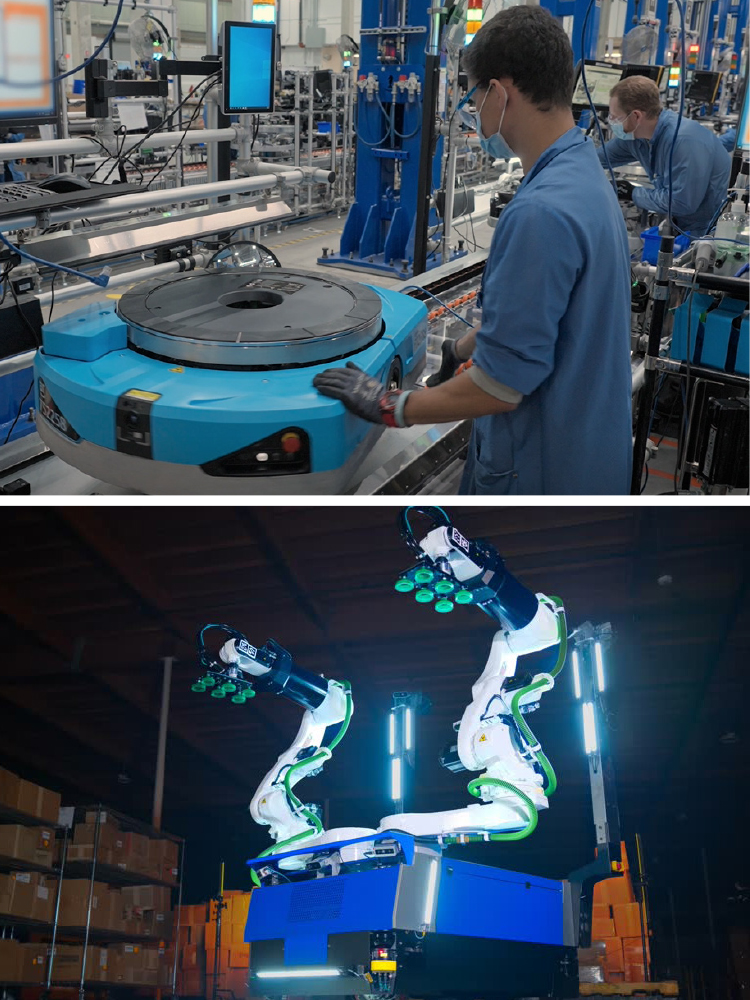
 Warehousing jobs are getting harder to fill. According to the 2026 MHI Annual Industry Report, 90% of supply chain organizations cite talent acquisition and workforce issues as a top challenge. Companies are responding by automating the jobs that are the most physically demanding and the hardest to staff.
FedEx and Amazon made major robotics announcements within days of each other this summer. FedEx and physical AI company Dexterity (bottom) are expanding their partnership beyond the pilot phase, moving Dexterity’s trailer-loading robot, Mech, into full production at the FedEx Hagerstown Hub in Maryland. Trailer loading has historically been one of the hardest tasks to automate because no two loads are alike. Mech uses a spatial reasoning system called Foresight to decide how to place packages for space, stability, and speed.
Amazon (top), meanwhile, is more than doubling its fleet of Cardinal and Sparrow robotic arms in 2026. Cardinal loads packages into carts, while Sparrow picks individual items from containers into totes. The company also introduced Vulcan, its first robot with a sense of touch, capable of stowing and retrieving items at the highest and lowest levels of inventory pods. Amazon says more than 40% of its items were delivered same-day or overnight in the first half of 2026, and credits robotics as a driver behind that metric.
FedEx and Amazon aren’t alone. The Association for Advancing Automation reports that collaborative robot orders jumped 55.6% in Q1 2026, even as automotive orders fell. This is a sign that demand is spreading well beyond the industries that have dominated the robotics market in the past.
The global warehouse automation market is currently projected to double by 2030. The companies moving now are building an advantage that will be difficult to close later.
Industrial Real Estate Stages a Comeback
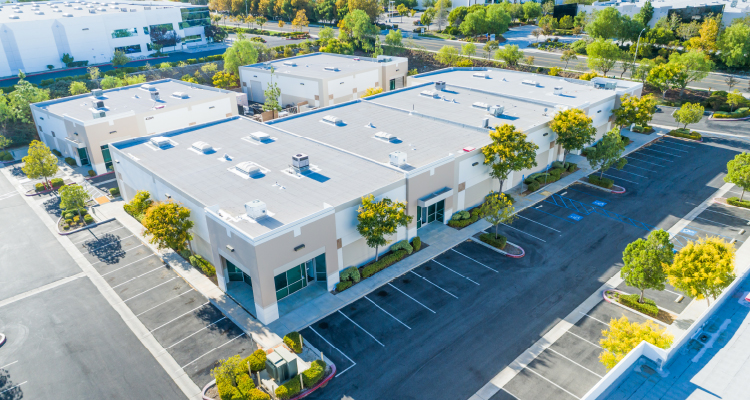
The U.S. industrial real estate market is on the path to recovery, according to Savills Research’s Q2 2026 State of the U.S. Industrial Market report. Leasing activity in the first half of 2026 reached 490.6 million square feet, up 27.1% from the same period last year. It’s the strongest first half since the 2021-2022 boom.
The report highlights the following trends:
The supply-demand gap that defined the past two years is closing. New space coming online outpaced demand by just 2.6% in the first half of 2026, the closest those two lines have been in four years. Vacancy held at 8.2% and asking rents nudged up to $9.74 per square foot.
3PLs and manufacturers account for 65% of leasing over the past four quarters. The tightest segment of the market is large-format space of 750,000 square feet and above, where vacancy has dropped 160 basis points YoY.
Regionally, the Sun Belt still leads on absorption, but the Heartland is closing the gap. Chicago, Columbus, Denver, Detroit, and Salt Lake City are attracting a broadening tenant base as companies look for alternatives to coastal and Sun Belt markets.
The data center boom is an emerging driver to watch. Companies that build, cool, power, and equip data centers have become major industrial tenants in markets such as Dallas-Fort Worth, Houston, and Atlanta, leasing large blocks of space for manufacturing and logistics operations tied to AI infrastructure.
Construction starts are creeping back up, led by speculative development. The pipeline is rising, but it remains 61.2% below its 2022 peak, so any supply response will be gradual.
Freight Fraud Takes a New Form
For years, the fight against freight fraud focused largely on catching fabricated carrier identities. Today, the approach is changing. As it becomes harder to fabricate a fake carrier from scratch, criminals increasingly hijack the trust already built into legitimate operations, according to the Q2 2026 Freight Fraud Index Report from Highway.
The new focus is on communication-based attacks, including compromised inboxes, spoofed emails, account takeovers, and impersonation calls, which now make up half of all classified fraud vectors, according to the report.
“Almost every successful theft starts with a bad actor exploiting your trust,” says Demi Ramon, Highway’s VP of risk. “They’re counting on a compromised contact method to appear legitimate.”
The surge coincides with regulatory shifts—FMCSA’s move to MOTUS, the Supreme Court’s Montgomery v. Caribe Transport II ruling, and the decertification of 15 ELD providers—that tightened identity verification industry-wide.
The report’s findings show the uptick clearly:
50% of classified fraud vectors in Q2 involved communication-based attacks, up from 42.7% in Q1.
Highway blocked 784,201 fraudulent inbound emails, up 48.5% quarter over quarter and 58.3% year over year.
109,995 fraudulent or spoofed phone calls were intercepted, up 53.2% from Q1 and 159.3% year over year.
Phishing and impersonation attempts targeting Highway’s own brand rose 282% quarter over quarter, adding 1,740 entries to its impersonation watch list.
25.6% of reported thefts involved ownership-change fraud, up from 23% in Q1—even as ownership-discrepancy alerts fell 40.9%.
OVERHEARD
Trucking’s Top Priorities

North American trucking remains a highly fragmented industry: More than 90% of carriers operate 10 trucks or fewer, and 99% run fleets under 100 units, according to Future of Trucking, a new report from Deloitte. Yet together, these carriers collectively move 11 billion tons of goods each year, underscoring the sector’s critical impact on the American economy.
Examining the health of the trucking sector, the report points to several headwinds the industry is now navigating. Freight cycles have become more unpredictable, with overcapacity and shifting demand making it harder for carriers to plan networks and keep rates consistent. Costs in labor, maintenance, insurance, and compliance are also climbing, which the report says is squeezing margins and slowing some carriers’ ability to invest in new equipment or technology.
On the workforce side, changing demographics and rising expectations around quality of life are reshaping recruitment, even as new technologies call for new skills. And on the policy front, evolving rules—from EPA emissions standards to trade policy—are adding a layer of complexity to long-term planning.
To improve performance and navigate these challenges, Deloitte recommends the following five priorities:
1. Adaptive structures. Design networks around consistent demand rather than peak conditions, utilizing “stacked” capacity—such as partnerships and leasing—to avoid overextending capital.
2. Predictive yield management. Move from manual dispatch to technology-enabled, network-aware pricing to maintain control over margins and reduce empty miles.
3. Active policy engagement. Treat regulatory engagement as a core business function. Leading carriers often form coalitions to help shape standards and infrastructure investments.
4. Intelligent asset design. Shift toward viewing trucks as integrated, intelligent platforms. Technologies such as digital twins, which combine telematics and vehicle health data, can optimize uptime and operational decision-making.
5. Workforce enablement. Use digital tools for coaching rather than just compliance. Leaders must foster collaboration between traditional staff and new digital specialists to support a safety-driven, data-literate operation.
Manufacturers Are Bullish on Physical AI
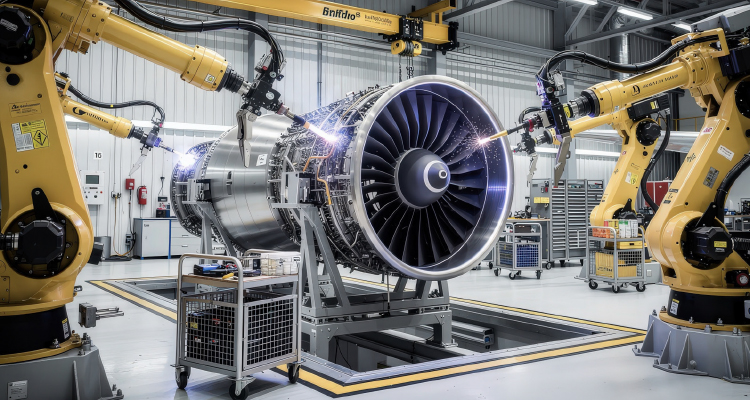
Manufacturing is at an inflection point: Enthusiasm for physical AI—systems that can perceive, reason, and act in the physical world—is running well ahead of actual deployment. That’s the conclusion from Tata Consultancy’s Future-Ready Manufacturing: TCS Physical AI Readiness Report 2026, based on a survey of 300 senior leaders across automotive, aerospace and defense, electronics, industrial equipment, and process manufacturing firms in North America and Europe.
The report’s central finding is that most manufacturers see the potential of physical AI, but far fewer have built the infrastructure, governance, and workforce capabilities to deploy it safely and repeatedly at scale.
Key data points from the report include:
77% of manufacturers expect Physical AI to have a significant or transformational impact on warehouse operations.
60% cite mitigating labor shortages as a top opportunity.
55% point to improved worker safety as a key benefit.
32% have moved beyond experimentation into pilots or active deployment.
68% are either not deploying Physical AI at all or remain stuck in experimental phases.
26% plan to increase investment in the next few years; notably, none plan to decrease it.
The report frames the primary barriers as structural challenges including legacy system integration, workforce skill gaps, and weak data infrastructure. Governance and compliance gaps are also emerging as new sources of risk as these systems begin influencing real-world operations.