
Articles
Logistics

Carrier Network Plants Seeds of Delivery Efficiency
By cultivating a partnership with a technology-based 3PL, a fruits and vegetables distributor quickly gets fresh deliveries to customers, with full visibility.
Read More
Incoterms: Playing by the Rules
When doing business globally, who pays the freight, you or your vendor? Who assumes the risk if cargo is damaged? Enter Incoterms, a set of international rules that interprets the most commonly used trade terms.
Read More
Most Mid-Market Supply Chains Are Under-Served
On average, mid-market supply chains ($50M to $150M) replace their supply chain providers every two to three years. The two overwhelming reasons why are because they don’t realize continuous return on investment (ROI) improvement and they lack strategic account support. Mid-market supply chain owners are caught in a conundrum: They’re too big for the small […]
Read More
Today’s Competitive Supply Chain: Digital, Smaller, More Resilient
Historically, the supply chain and manufacturing industry has been relatively slow to embrace the opportunities presented by the digital revolution. Technology is advancing quickly, and it’s time to buck this trend. Whether it’s recognizing the crucial strategic strength and impact offered by the Internet of Things (IoT), taking advantage of the dramatic increase in automation, […]
Read More
Redefining Globalism?
Not long ago, Deutsche Bank, Thomas Friedman, and many economic experts announced that globalism is dead. Even technology visionary Peter Thiel recently said, "The tide on globalism is going out." Deutsche Bank chief strategist George Saravelos frames globalism’s death notice this way: "The world has been on a ‘globalizing’ trend since the end of World […]
Read More
Defending Your Supply Chain Against Hackers
As organizations continue to outsource, form partnerships, and share data with third parties, a strong vendor risk management (VRM) program that stays ahead of risks in the information supply chain has to be a top priority. Hackers stole confidential data from tens of millions of Target customers during the height of the holiday shopping season. […]
Read More
GOOD QUESTION | What part of working in supply chain do you find the most rewarding?
We have a material impact on the experience our clients deliver for their customers. The convergence of technology and physical movement makes supply chain automation exciting and rewarding. The ability of leaders in the space to use logistics as a competitive differentiator has made it even more interesting. Chris Lingamfelter President, White Systems For me, […]
Read More
GTM Solutions: Making a World of Difference
How Global Trade Management (GTM) solutions automate complex international supply chain sourcing, logistics, cross-border trade, and regulatory compliance activities.
Read More
Clear Direction, Abundant Communication
Manny Calandrino got his first job in a trucking company in 1976, in the customer service and overage/shortage/damages department. Working his way from this entry-level position through every department, he discovered that what had started as just a job had grown into his career. MORE TO THE STORY: Wanted: Well-Rounded Entrepreneurs “I fell in love […]
Read More
Retail Logistics Bets on E-Commerce
For retailers, e-commerce—and its impact on supply chain management—is no longer a roll of the dice; it’s a sure thing. Here’s how successful retailers beat the odds.
Read More
Tom Ciepichal: Centered On Supply Chain Strategy
Tom Ciepichal is vice president, operational excellence and supply chain, with Dover Energy, a segment of Dover Corporation, a global manufacturer of equipment, components, and specialty systems in energy, engineered systems, fluids, and refrigeration and food equipment. He has held this position since 2016. Responsibilities: Continuous improvement, transformation, and operational excellence in the supply chain. […]
Read More
Georgia: Setting the Pace in the Logistics Race
An ideal location, reliable infrastructure, talented workforce, and best-of-breed technology position companies locating in Georgia to take the lead.
Read More
Trends—March 2017
Freight Rails Make Federal Case for Funding Private funding for infrastructure is a valuable tool that can save money for the American taxpayer, but it isn’t a be-all, end-all solution to U.S. transportation problems. Transportation executives took to Capitol Hill in February 2017 to plead with the Senate Commerce, Science, and Transportation subcommittee to provide […]
Read More
Extending the Life Sciences and Pharmaceutical Supply Chain
In the life science and pharmaceutical area, an inefficient supply chain can cause serious problems including product degradation and late deliveries of life-saving medications. Third-party logistics (3PL) providers specialize in streamlining their customers’ supply chains, merging logistics expertise with state-of-the-art innovations. While manufacturers search for ways to distinguish products in a competitive marketplace, many do […]
Read More
Global Logistics—March 2017
Canada and EU Spell Out Free Trade Agreement to Reduce Tariffs, Open Market Access After much debate, the European Union (EU) and Canada approved the controversial Comprehensive Economic and Trade Agreement (CETA). While some parts of the deal regarding foreign direct investment still require approval from individual governments—a process that could take years—CETA will soon […]
Read More
Advantages of Digital Technology
Q: INTTRA recently celebrated its 15th anniversary. Can you describe how digitization in ocean shipping has evolved since 2001? A: Some carriers and shippers moved to adopt standardizing form exchanges early on; then bespoke, single-process products (e.g., rates management), and later ERP systems. Cloud-based Transportation Management Systems (TMS) allowing shippers to avoid expensive in-house implementations […]
Read More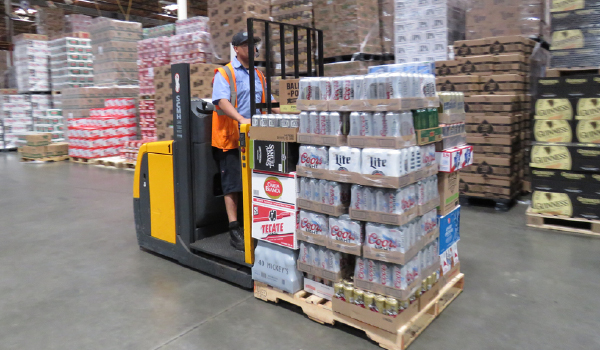
Efficient Order Picking Speeds Distribution
Classic Distributing increases pick rates by 22% with the Jungheinrich® low-level order picker.
Read More
How to Meet Global Shipment Compliance Challenges
Q: What role does technology play in meeting today’s challenges of global shipment compliance? A: Today’s complexities in managing export and import shipments are evident. When U.S. Customs announced the requirement of Sea AMS filing, which is also known as the 24-Hour Rule, it started a wave of technology enhancements throughout the globe requiring all […]
Read More
Enabling a Faster-to-Market Solution
Fast growth in ever-expanding global markets, and the need to serve its retail and online clients in Asian markets, drove home furnishings retailer Cath Kidston to approach SEKO for a solution.
Read More
How to Reap the Benefits of Asian Free Trade Agreements
Asian governments began developing bilateral free trade agreements (FTA) in addition to region-based multilateral agreements in 2000. These bilateral agreements were viewed as easier to negotiate and provided a quicker way to open up new export markets. The growth of bilateral FTAs in this region has led to what many economists refer to as the […]
Read More