
Articles
Logistics I.T.

From Dynamic Updates to AI: How Tech Turbocharges Last-Mile Delivery
Gone are the days of consumers gazing out the window waiting for a delivery to show up. Tech innovations make it faster and cheaper for shippers to deliver their products to the doorstep, while enhancing the customer experience.
Read More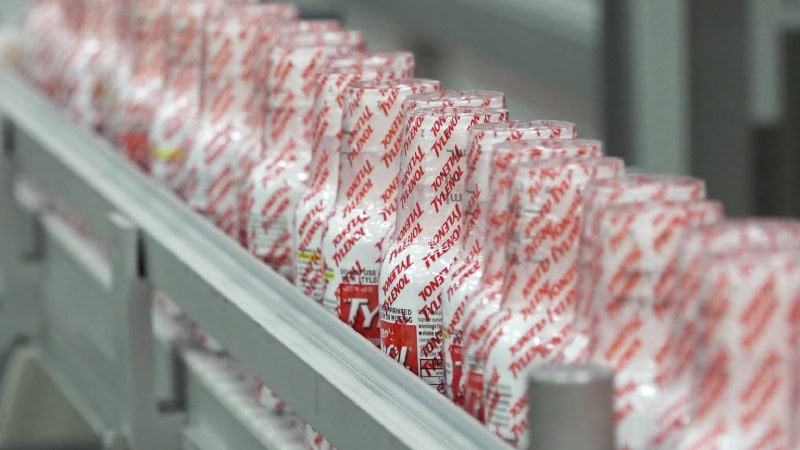
Partnering with Customers and Leveraging Data to Boost Health
In May 2023, Kenvue, the company behind iconic brands such as Tylenol and Listerine, spun off from Johnson & Johnson, becoming the world’s largest pure-play consumer health company by revenue. The spinoff also meant Kenvue’s leadership team had to establish strong supply chain operations as a consumer goods company, rather than as part of a pharmaceutical firm.
Read More
Tips for Closing the Visibility Gap
With modern supply chains being so intricate and involving numerous stakeholders, maintaining full visibility is becoming increasingly challenging. However, many businesses operate with fragmented and legacy systems where data lives in different silos and across different platforms. This lack of integration makes it difficult to track and monitor the entire supply chain in real time.
Read More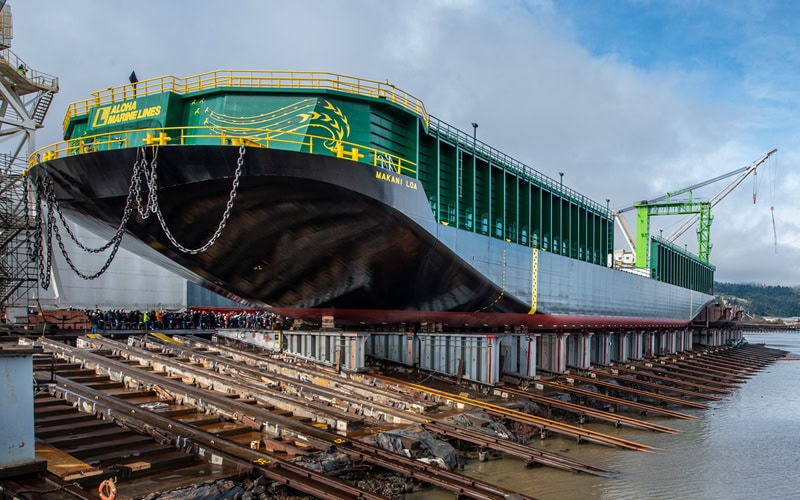
IN BRIEF: New Services and Solutions
Aloha Marine Lines, part of the Lynden family of companies, added a new barge to its fleet to serve customers in the Seattle to Hawaii trade lane. Constructed at Gunderson Marine & Iron in Portland, Oregon, the Makani Loa joins the Kamakani and Namakani—all Makani Class barges that serve Aloha Marine Lines’ bi-weekly barge service between Seattle and Hawaii. The Makani Class barges are fitted with high binwalls which help to keep freight secure while minimizing the amount of lashing needed.
Read More
The Indispensable Edge: TMS Empowers Shippers in a Competitive Landscape
Stop pushing boxes. For companies looking to get ahead, a Transportation Management System (TMS) is no longer a luxury, it’s a necessity. Leading TMS providers offer solutions and innovations to propel shippers toward efficiency, cost reduction, and superior service delivery.
Read More
OTTO Motors Founder Talks AMRs, APIs, and Entrepreneurial DNA
After starting his materials handling robotics company with just $200, Matt Rendall has learned to focus relentlessly on product and customer development, lead with humility, trust his gut, and allow his team to learn from mistakes.
Read More
From Experimentation to Transformation: Generative AI in the Supply Chain
For most organizations, GenAI is still in the experimental phase, and business leaders may be unsure of how to identify the best use cases within their organizations to leverage as a jumping-off point.
Read More
ProvisionAi and Riviana Foods: Get a Load of This
Walk through any grocery store, and you’ll likely come across products from Riviana Foods. It’s one of the largest processors, marketers, and distributors of branded and private-label rice products in the United States. Its brands include Minute, Success, Mahatma, Adolphus, RiceSelect, and others.
Read More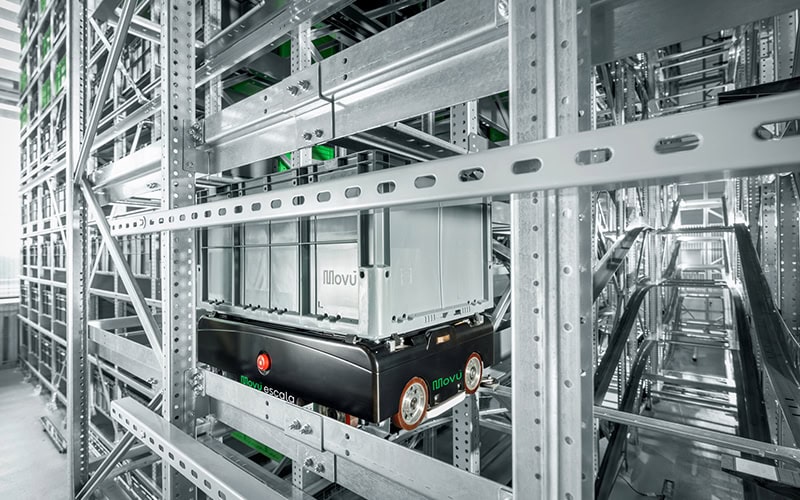
IN BRIEF: New Services and Solutions
The Movu 3D shuttle system escala is a flexible robotic automated bin storage and retrieval sub-system, suitable for even the smallest applications of bin-compatible products. Robots move along a rail track that connects every location point within the dense storage and retrieval rack, transferring between levels via ramps. Intelligent management software allows sequencing of bins at multiple points within the system and at the goods-to-person workstations.
Read More
Supply Chain Resilience: Overcoming the Obstacles
Organizations draw on resilience planning and impactful technology for the strength to resist the challenges of lengthy supply chains and ongoing disruptions.
Read More
Supply Chain Technology: What’s Coming Online?
The next wave of supply chain technology includes exciting innovations such as closed AI systems, non-human customers, edge processing, and LEO satellites. Are you ready?
Read More
2024 IL Market Research: Logistics IT Steps Up
IL’s annual report illuminates how companies are increasing supply chain technology investments to become more efficient and light up return-on-investment.
Read More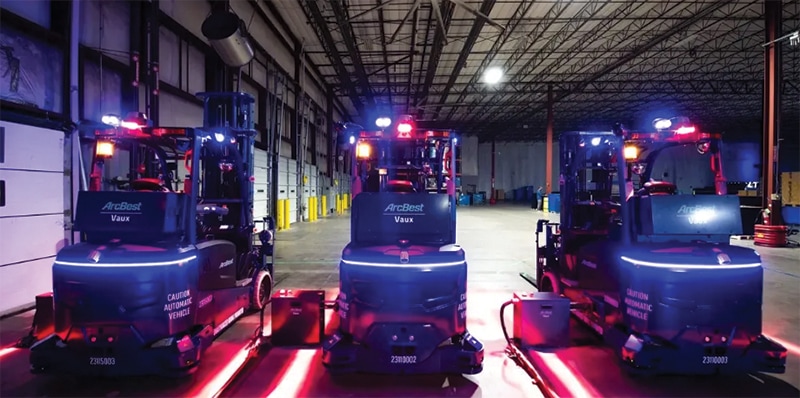
IN BRIEF: New Services and Solutions
ArcBest’s new Vaux Smart Autonomy offering combines autonomous mobile robot (AMR) forklifts and reach trucks, software, and remote teleoperation capabilities to autonomously handle materials movement within warehouses, distribution centers, and manufacturing facilities. The materials handling technology is flexible out of the box to handle variability in facilities, processes, and product characteristics.
Read More
Next-Gen Logistics: AI and Innovation Trends in 2024
The logistics industry is on the brink of a major transformation, fueled by artificial intelligence and technological advancements. These changes target improvements in operational efficiency and customer experience. As these trends emerge, they’re reshaping logistics from its traditional role into a key driver of business success and customer satisfaction.
Read More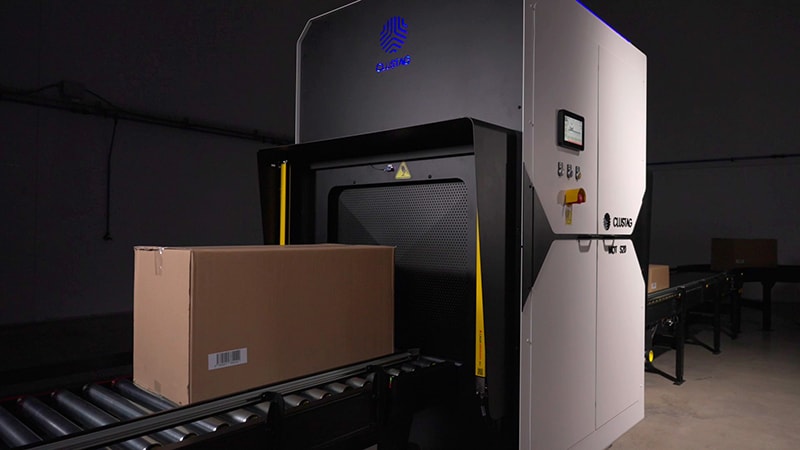
IN BRIEF: New Services and Solutions
Clustag’s MOT Station can drive inventory accuracy up to 99.92% and scan 400 tags per case at speeds of up to 1,000 cases per hour. The RFID-based solution for distribution centers and warehouses aggregates three pieces of data—RFID identification, case volume, and case weight—to improve the inventory management process.
Read More
What Tech Trends Should You Prioritize?
Logistics organizations remain under pressure to control costs while dealing with unprecedented labor challenges. Historically, few have prioritized technology investment to help address these sorts of issues.
Read More
Bringing Order to Chaos: DDC FPO Unleashes the Power of Unstructured Data
Powered by machine learning, the latest addition to DDC FPO’s technology suite swiftly cleanses and structures unstructured data into crucial insights.
Read More
How to Future-Proof Your Supply Chain from Freight Embargoes
With CarrierConnect XL and transit service alerts, shippers can make better decisions during a freight embargo to mitigate disruptions in less-than-truckload service.
Read More
Leveraging Predictive Analytics to Gain a Competitive Edge
Predictive analytics helps companies make better decisions. The key is to have good data. For example, enterprises can use data to predict how much demand there will be for their products or services, how much capacity they need, how to manage inventory, and how to avoid risks.
Read More
Custom Dashboard Provides Rail Data Insights and Boosts Efficiencies
RSI Logistics developed a custom dashboard tailored to meet its client’s needs with unmatched precision and accuracy, enabling them to make firm, data-driven decisions that ignited confidence.
Read More